Total hip replacement
Restoring comfortable,
functional hip movement
Total hip replacement provides excellent restoration of comfort and function in carefully selected dogs and cats with painful hip disease.
The difficult part is not always performing the operation. It is recognising which patients may benefit from it.
A patient does not need to arrive with a firm decision that total hip replacement is required. If you are wondering whether THR could be relevant, that is enough reason to discuss the case.
You do not need to make that decision before getting in touch
THR is performed far less frequently than many routine orthopaedic procedures, so identifying the right candidate is not something every primary care vet is expected to do regularly.
Hip pain, reduced limb function – often resulting in muscle atrophy – radiographic changes, age, body weight, activity levels and response to conservative treatment can all contribute to the decision. No single one of these factors determines whether THR is appropriate.
If you have a patient with significant hip disease and are simply wondering whether total hip replacement might be worth considering, Maciej is available to discuss the case, review the history and imaging and help determine the most appropriate next step.
You do not need to know that the patient needs a THR before starting the conversation.
Discuss a possible THR caseHip dysplasia is more than an abnormal radiograph
Hip dysplasia is a developmental disorder in which abnormal joint laxity and incongruity can lead to abnormal loading, cartilage damage, progressive osteoarthritis, pain and loss of function.
Radiographic severity and clinical signs do not always match. Treatment should therefore be based on the individual patient, their comfort, function and lifestyle rather than the radiograph alone.
Hip dysplasia does not automatically mean hip replacement
Treatment depends on age, clinical signs, anatomy, the presence of osteoarthritis, activity levels and response to previous management.
Conservative management
Weight management, changes to exercise regime, rehabilitation and analgesia where indicated can provide effective long-term management for many patients.
Joint-preserving surgery
In appropriately selected immature patients, procedures designed to improve hip mechanics may be considered before significant osteoarthritis develops.
Femoral head and neck excision
FHO removes painful joint contact and creates a functional pseudoarthrosis, but does not recreate normal hip anatomy or normal joint biomechanics.
Total hip replacement
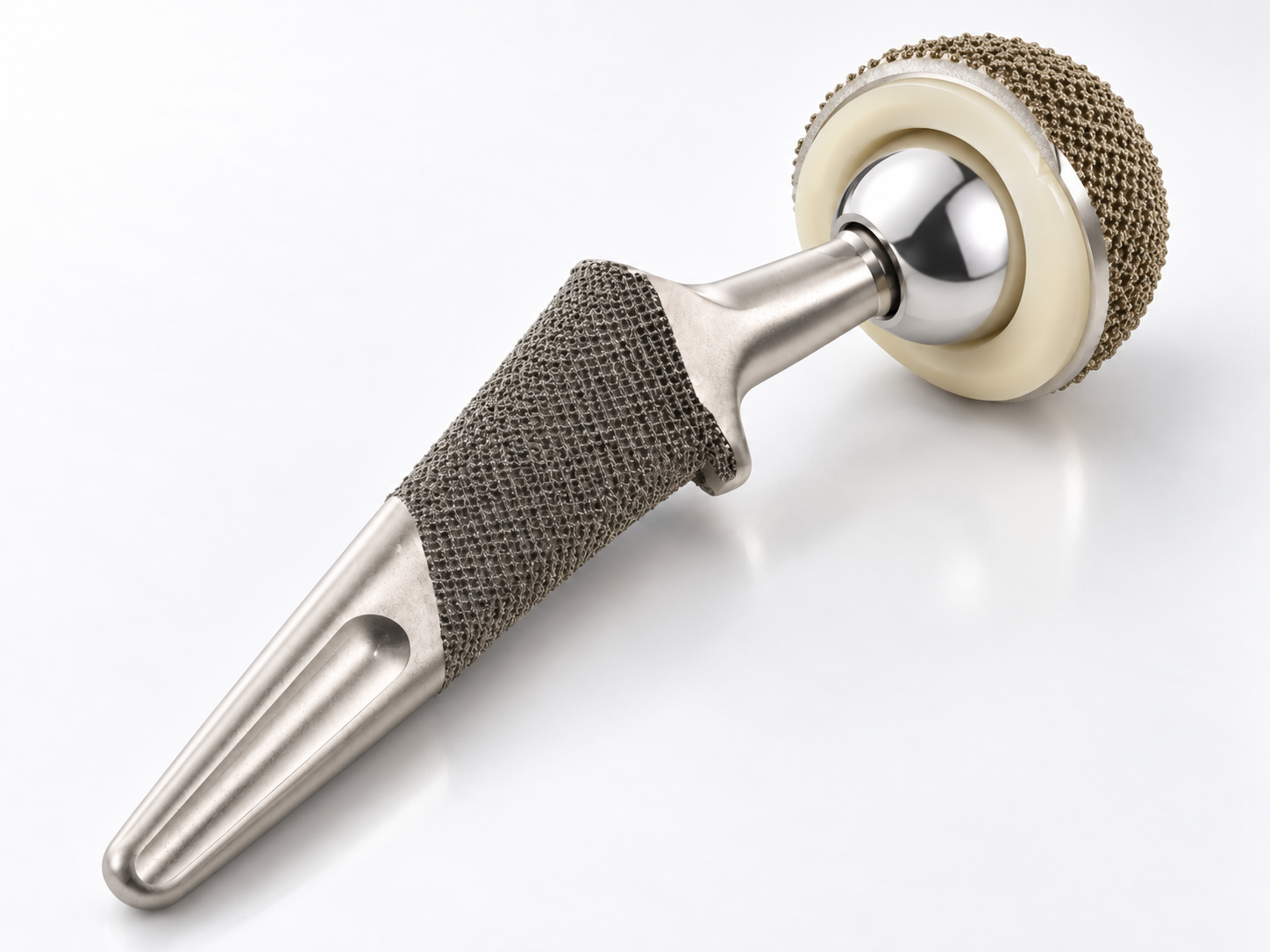
THR removes the painful diseased joint and creates a stable prosthetic ball-and-socket articulation, with the aim of restoring comfortable and substantially more normal hip mechanics.
Removing the painful joint and creating a functional replacement
During total hip replacement, the painful native hip is removed and a prosthetic ball-and-socket joint is created using femoral and acetabular components.
The aim is not simply to remove painful bone-on-bone contact, but to restore a stable and functional hip with substantially more normal biomechanics.
Why perform THR?
THR can provide a durable solution for patients whose hip disease causes significant pain or dysfunction and in whom preservation of the native joint is no longer realistic or appropriate.
What is the objective?
The objective is comfortable, reliable use of the limb and restoration of functional hip mechanics rather than simply adaptation to a painful or mechanically abnormal joint.
See how total hip replacement works
This short animated video shows the basic steps of total hip replacement in a clear, non-graphic way, including removal of the diseased joint surfaces and placement of the prosthetic components.
It is an animation rather than real surgical footage.
Cemented and press-fit total hip replacement
Expert to the Bone uses BioMedtrix total hip replacement systems. Both cemented and cementless press-fit fixation are available.
Implant choice is based on the individual patient's anatomy, bone morphology, bone quality and pre-operative planning rather than on a simple preference for one technique.
CFX – cemented
Prosthetic components are stabilised using bone cement.
BFX – press-fit
Initial mechanical stability is achieved through press-fit fixation, followed by biological integration with bone.
Hybrid fixation
Cemented and press-fit components can be combined where appropriate for the individual patient.
From cats and Chihuahuas to Great Danes
Modern implant ranges mean that THR is not limited to the traditional medium or large dog.
Maciej has experience performing total hip replacement in cats and very small dogs through to giant-breed patients. Final suitability depends on anatomy, imaging, bone quality and available implant sizing rather than bodyweight alone.
Which patients are worth discussing?
The decision is driven primarily by the patient's pain, function, lifestyle and underlying hip pathology rather than radiographic appearance alone.
THR may be worth considering when there is:
THR may be inappropriate or need to be delayed when there is:
Other conditions where THR may be considered
Total hip replacement is not limited to hip dysplasia and osteoarthritis. In selected patients it can also provide a reconstructive option for traumatic, developmental or previously treated hip disease.
Femoral head, neck or acetabular fractures
THR may be considered where reconstruction is not feasible, where the likelihood of restoring a durable functional native joint is poor, or where previous treatment has failed.
Coxofemoral luxation
Chronic, recurrent or irreducible hip luxation may occasionally require THR when the joint cannot be reconstructed or stabilised reliably.
Legg-Calvé-Perthes disease
Avascular necrosis of the femoral head can result in collapse, deformation and painful loss of normal hip mechanics. THR can be considered in selected patients where restoration of a functional ball-and-socket joint is desirable.
Capital physeal fractures
In selected displaced, chronic or non-reconstructable capital physeal fractures, THR may provide an alternative when preservation of the native femoral head is no longer appropriate.
Failed previous hip surgery
Persistent pain or dysfunction following previous surgery around the hip may occasionally be managed with THR where anatomy and implant options remain suitable.
Other destructive hip disease
Other conditions resulting in irreversible destruction, deformation or painful loss of normal hip function may also be considered individually.
The diagnosis alone is not an indication for THR.
The decision depends on pain, function, anatomy, lifestyle, available reconstructive options and the likelihood of achieving a satisfactory long-term result.
Why is THR called a salvage procedure?
In orthopaedic surgery, a salvage procedure is one used when preserving the diseased native joint is no longer realistic or appropriate.
It does not mean that a poor functional result is expected.
THR permanently removes the painful native joint and creates a prosthetic replacement. The aim is not simply to make the patient tolerate the condition, but to create a comfortable and functional hip with substantially more normal biomechanics.
Different operations with different objectives
Both procedures can relieve pain, but they achieve this in very different ways.
Femoral head and neck excision
FHO removes the painful articulation and relies on formation of a functional pseudoarthrosis. The original ball-and-socket joint is not reconstructed.
Total hip replacement
THR removes the painful native articulation and creates a new prosthetic ball-and-socket joint, with the aim of restoring limb length and more normal hip biomechanics.
Excellent outcomes are possible – but THR is major surgery
Appropriately selected patients generally achieve substantial improvement in comfort, mobility and limb function following total hip replacement.
As with any major orthopaedic procedure, complications can occur and owners should understand these before surgery.
Potential complications
Complications can include luxation, femoral fracture, infection, implant loosening, neurological injury and implant-related problems.
Published complication rates vary depending on the implant system, case selection, follow-up period and how complications are defined.
Ongoing THR outcome audit
Maciej maintains an ongoing internal clinical audit of his own total hip replacement outcomes and complications.
His recent audit demonstrates a low rate of major complications. Continued review of outcomes forms part of case selection, surgical planning and clinical governance.
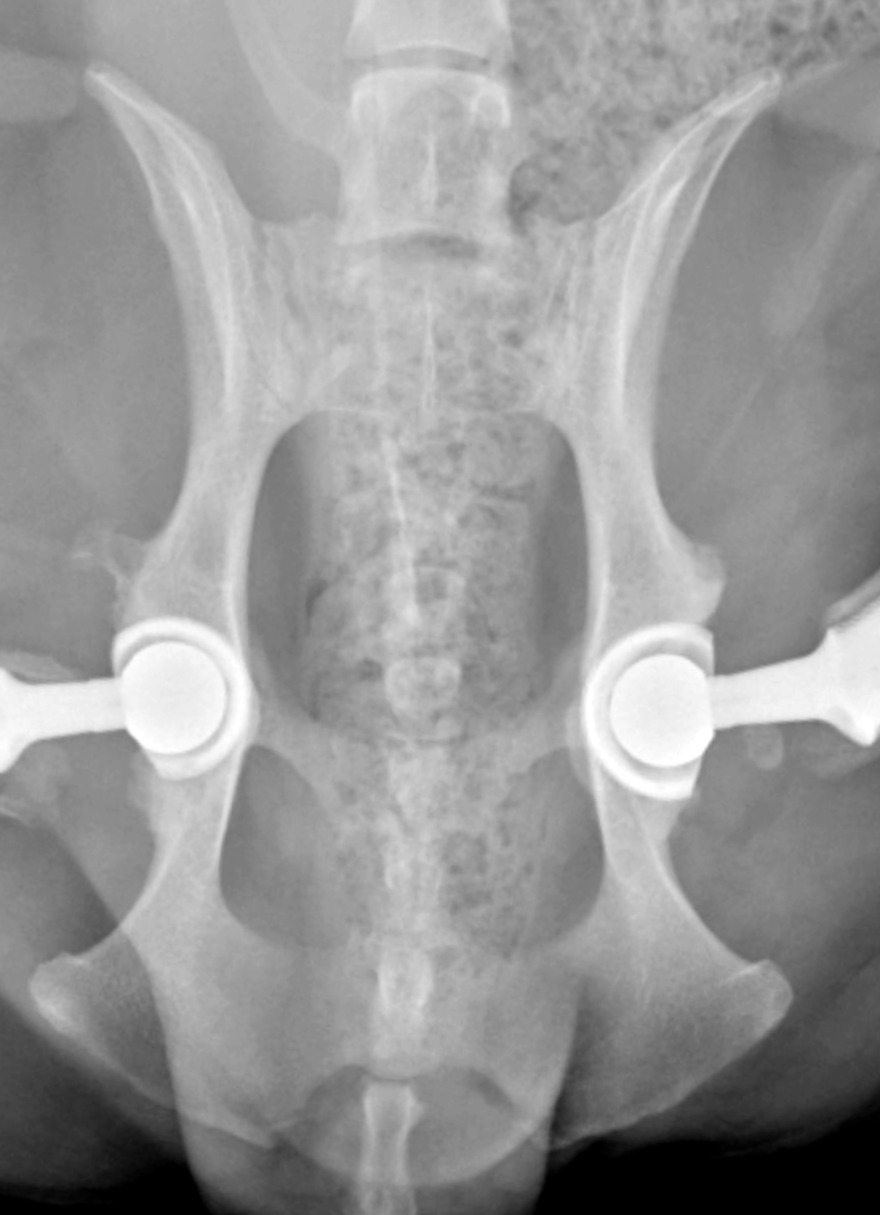
Bilateral total hip replacements from one of Maciej's cases, performed on separate occasions.
A patient can still access THR even if your premises are not suitable for joint replacement surgery
Joint replacement requires particularly strict theatre discipline, asepsis, implant handling and appropriate postoperative hospitalisation.
If your practice is not set up for this, it does not prevent Maciej from assessing the patient, reviewing imaging or becoming involved in treatment planning.
Where THR is considered appropriate, the operation and immediate postoperative hospitalisation can move to a suggested suitable practice with the theatre environment, anaesthetic support, sterility and inpatient care required for joint replacement.
Keeping the patient's usual practice involved
Wherever clinically appropriate, assessment and postoperative care remain with the veterinary team that already knows the patient and owner.
Assessment
The patient can be examined at their usual practice. Existing imaging can be reviewed and further imaging arranged if required.
Planning
Suitability, implant choice, surgical planning and the practical arrangements for THR are agreed before surgery.
THR at a suitable host practice
Surgery and immediate postoperative hospitalisation move to a suggested suitable practice with an environment prepared for joint replacement.
Back to the usual practice
Routine postoperative examinations and follow-up radiographs can usually be performed locally, with Maciej reviewing progress and imaging throughout recovery.
Making total hip replacement more affordable
THR requires specialised implants, instrumentation and an appropriate surgical environment. It does not mean that every stage of the patient's care needs to take place within a large surgical centre.
By concentrating the operation and immediate hospitalisation within suitably equipped host practices while allowing assessment and much of the follow-up to remain within the patient's usual practice, the peripatetic model reduces unnecessary infrastructure and service overheads.
This helps make total hip replacement more affordable and accessible without lowering the clinical standards required for the surgery itself.
Questions worth discussing
Is this patient too small for THR?
Not necessarily. THR can be performed in very small patients, including cats and toy-breed dogs. Suitability depends on individual anatomy, bone quality and available implant sizing.
Is this patient too old for THR?
Chronological age alone does not determine suitability. General health, anaesthetic risk, concurrent disease, mobility, activity levels and the expected benefit of surgery are more important considerations.
Does severe radiographic hip dysplasia automatically mean THR?
No. Clinical pain, lameness, decreased muscle mass, lifestyle and how much the condition affects the individual patient are central to treatment decisions. Radiographs are an important part of the assessment, but they should not determine treatment in isolation.
What if both hips are affected?
Bilateral hip disease is common, but many dogs achieve satisfactory function following unilateral THR and do not require replacement of the opposite hip. The need for a second THR is assessed individually according to residual pain, function and the clinical response following treatment of the first hip.
Does my practice need facilities suitable for THR?
No. Assessment, imaging and case discussion can still take place through the patient's usual practice.
If the premises are not appropriate for joint replacement, only the operation and immediate hospitalisation need to move to a suggested suitable practice. Routine postoperative checks, follow-up radiographs and much of the ongoing owner contact can usually remain with the patient's usual veterinary team.
What if I am not sure whether THR is even relevant?
Get in touch. There is no need to establish the indication before asking for an opinion. The history and available radiographs can be reviewed first and the options discussed without committing the owner to surgery.
Think THR might be relevant?
Send the clinical history and available radiographs. You do not need to know that THR is indicated before getting in touch – discussing the case is the first step.